


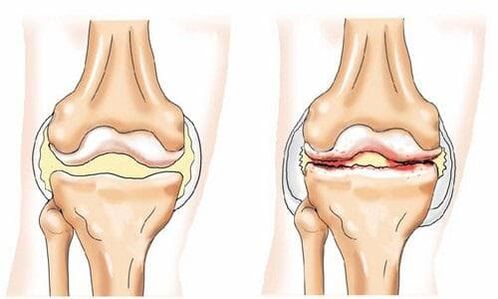
Styroarthrosis of the knee is a degenerative dystrophic disease.In this disease, cartilage tissue is destroyed and the joints become deformed.
Generally, knee joint disease affects people over the age of 40.The disease is twice as common in women as in men.
The knee joint is one of the largest joints in the human body.It is characterized by a high degree of mobility, since it is not only responsible for the mobility of the legs, but also helps to support the person's weight.It acts as a connecting "bridge" between the femur, tibia, and fibula.The knee joint is supported by various ligaments and tendons.
Diagnosis and symptoms
With knee arthropathy, blood circulation in the small bone vessels is disrupted, and subsequently the cartilage covering of the joint and surrounding tissue begins to collapse.Due to age or other reasons, the density and elasticity of cartilage decreases, and cracks and depressions appear.
As a diagnostic measure, patients should consult a specialist for a thorough physical examination and X-rays.Of course, everyone should know the symptoms of knee arthritis:
- The patient experiences knee pain when moving;
- Swelling was observed at the site of injury;
- Movement of the injured knee is limited;
- A sore knee feels unstable;
- rigidity;
- The end result of this disease can be thought of as joint deformation: the most common is O-shape or valgus, i.e. X-shape.
It's important to note that the severity of some symptoms does not indicate how advanced the disease is.However, as knee joint disease progresses, the severity of symptoms steadily increases.
Experts have long known the symptoms of knee joint disease.They were described about a hundred years ago.Colloquially, it is no myth that this disease is characterized by salt deposits.Arthropathy does accompany the deposition of salt in the tissues of the knee, including ligaments and tendons.
stages of knee joint disease
Experts distinguish several degrees of development of knee joint disease, which indicate the severity of the patient's condition.Therefore, there are three levels of arthritis in the knee joint:
Symptoms of first-degree knee joint disease usually subside to periodic pain and slight deformation of the joint after exercise.It is not uncommon to see tumors in the affected area.
As for second degree arthropathy, the main symptoms increase during this stage.Knee pain increases in intensity and duration, a crunching sound occurs, and difficulty bending occurs.The joint volume has increased and the deformation has become obvious.
Third-degree knee osteoarthritis is characterized by pain that occurs not only during movement but also at rest.His mobility is limited and his gait is severely disordered.The joint becomes deformed and takes on an O- or X-shape.
treat
Before you start fighting osteoarthritis of the knee, be sure to find a good specialist, get a checkup plan from him, and discuss treatment options.However, all the recommendations of the doctor should not be followed blindly; the patient himself must also understand the nature of his recommendations, understand the mechanism of action of the prescribed medication, and perhaps also seek help from another specialist.Every patient must understand the nature of the prescribed treatment procedures and understand why they are being prescribed to him.
Treatment of knee arthritis involves a variety of treatments designed to address the following:
- relieve pain;
- Improves nutrition of joint cartilage and allows it to recover quickly;
- activates blood circulation in the affected joint area;
- Reduces stress on damaged joints and increases the distance between them;
- Strengthens muscles around painful joints;
- Increase joint mobility.
Advanced forms of knee joint disease require treatment, including surgery.
Grade 1 knee arthritis requires treatment, which may include physical therapy procedures.X-rays are virtually unable to detect the initial stages of the disease.The following symptoms are characteristic of grade 1 knee arthropathy:
- rigidity;
- Discomfort and discomfort in the affected joint area;
- Reduce pain after exercising during the day.
Second-degree knee arthritis requires medication.Symptoms of this stage are considered to be severe pain up to the knee where it is difficult to bend the leg.
Exercise therapy for knee joint disease
One of the effective ways to restore knee joint function is physical therapy. After treatment, the following conditions can be observed:
- Reduce joint pain;
- Improve mobility of diseased joints;
- Reduce muscle tension;
- Increases tone in weak muscles.
Gymnastics treats knee joint disease

In conjunction with drug therapy, and according to the instructions of specialists, gymnastics should also be performed, which is usually done in the initial stages of the disease.To a greater extent, gymnastics is used for preventive purposes.Therapeutic exercises for the knee joint can help:
- Improve the nutrition of joint cartilage;
- Increase knee joint mobility;
- Strengthens the ligaments and muscles that support joints;
- Reduce pain and have a positive impact on the patient's overall health.
Treatment should begin as soon as possible, as the entire process takes considerable time and requires a comprehensive approach.
Unfortunately, it's impossible to completely restore a joint to its original shape, but you shouldn't delay treatment.Patients must promptly prevent degenerative processes.
Folk remedies to combat knee joint disease
Patients suffering from knee joint disease are widely treated using traditional methods.However, you should remember that you need to consult an expert anyway.
Burdock is considered the most common remedy for joint diseases.The leaves of this plant must be washed, dried and folded so that the soft side faces down.Next, you should place the leaves in a container and pour hot water.The painful area should be lubricated with vegetable oil and leaves should be applied, the knee should be wrapped in polyethylene and fixed with a warm scarf.
Common sunflower oil is considered another traditional medicine.It must be heated and rubbed into painful joints at night.After five surgeries, the pain will disappear.
Cabbage is also popular in folk medicine.To treat knee joint problems, its leaves can be coated with honey and applied to sore joints at night.It is best to continue treatment for one month.
In the early stages of the disease, you can do some exercises.This is best done in a physical therapy room.This set of exercises should be systematic and regular, done several times a day.After exercise, it's a good idea to rest by applying warm compresses to sore joints.Additionally, in addition to exercise therapy, you can simply take a walk, swim in a pool, or ride a bike.
Diet and massage
Diet and visits to massage parlors are also considered important ways to combat knee joint disease.Scientists have shown that overweight people fall into the first risk group, as the extra weight puts tremendous pressure on the knees, causing the joints to wear out and become deformed.
Nutrition of joints should be balanced and regular.Maintaining a healthy lifestyle helps prevent and speed recovery.
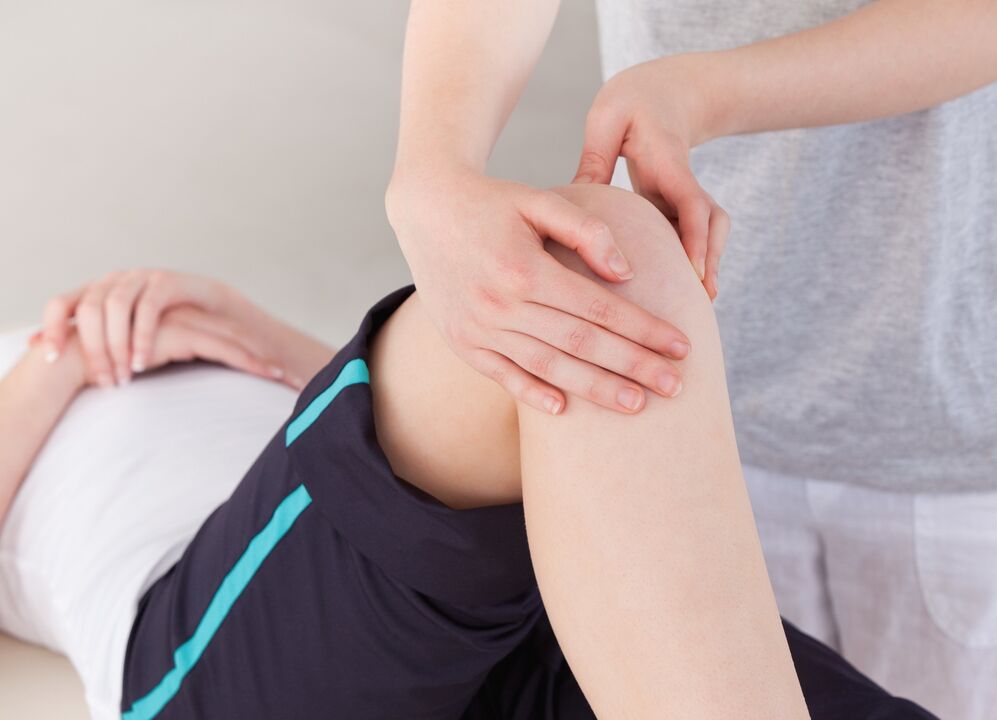
As for massage, it can only be performed by a specialist.These procedures will reduce pain and eliminate symptoms of the disease.Massage also helps improve tissue nutrition, strengthen and develop knee muscles, and prevent deformation and subsequent atrophy.However, these methods are most relevant in the initial stages of the disease.When the first symptoms appear, you should immediately contact a specialist for examination.
remember!You can't diagnose yourself!Because many diseases are accompanied by joint lesions similar to arthrosis.Therefore, errors in disease identification can easily occur.